
Why is renal denervation being talked about more in the UK? 'Ad feature' by Medtronic
'Ad feature' by Medtronic
High blood pressure: why experts and policymakers are paying attention
If you have high blood pressure that remains above the recommended target despite lifestyle changes and medications, you are not alone. For some people, blood pressure can remain difficult to control even when they are following the advice of their healthcare team.
Recently, resistant hypertension was discussed in the House of Lords, bringing greater attention to the impact that persistently high blood pressure can have on individuals, families and the NHS1. Members from across different political parties took part in the discussion, and the Government recognised that renal denervation (RDN) has a role to play in treating resistant hypertension.
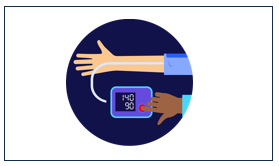
A different approach to lowering blood pressure
For many years, treatment for high blood pressure has centered on healthy lifestyle changes and prescribed medicines. These remain essential. However, there is now another treatment option for some people whose blood pressure remains uncontrolled: renal denervation.2,3
Renal denervation is a minimally invasive procedure that calms overactive nerves around the kidneys which may be contributing to high blood pressure. A doctor guides a thin tube, called a catheter, through an artery to reach the arteries supplying the kidneys. The treatment is delivered through the catheter, which is then removed, so no implant is left behind. 2,3,4
RDN is designed to complement, rather than replace, lifestyle changes and prescribed medicines. Whether it is suitable depends on each person's health, treatment history and preferences.5,6
Who might be considered for RDN?
A recent UK expert consensus7 set out how RDN could be used in clinical practice. The experts agreed that it may be considered for adults whose blood pressure remains high despite taking several blood pressure medicines, as well as some people who cannot tolerate these medicines because of side effects.
The consensus also emphasised that suitability should be assessed by a team of healthcare professionals and discussed with the patient. This is known as shared decision-making: understanding the possible benefits and risks, considering what matters to you and deciding together whether a treatment is appropriate.
Looking ahead
Awareness of renal denervation is growing in the UK. It will not be suitable for everyone, but people living with uncontrolled or resistant hypertension should be aware that additional approaches may exist. If your blood pressure remains difficult to manage, an open conversation with your healthcare team can help you understand your readings review your treatment and explore whether specialist advice may be helpful.
Questions can help you take an active role in your care
If your blood pressure remains above target, you may wish to ask your GP, nurse or hypertension specialist:
- Is my blood pressure currently considered controlled?
- Have we explored possible reasons why it remains high?
- Are my current medicines and doses the most suitable for me?
- Should I be referred to a hypertension specialist?
- What other treatment options are available, and could renal denervation be appropriate for me?
Do not stop or change prescribed medicines without speaking to a healthcare professional.
CTA: LEARN MORE ABOUT RENAL DENERVATION
1 https://www.parliamentlive.tv/Event/Index/f0cd0bb8-f5c6-43bd-9b11-3ec8d09956bc#player-tabs From min 15:28
2 Kandzari DE, et al. The Lancet. 2018 Jun 9;391(10137):2346-2355.2.
3 Böhm M, et al. Lancet. 2020;395(10234):1444–1451.
4 Townsend RR, et al. The Lancet. 2017;390:2160–2170.
5 Mancia G. et al. Journal of Hypertension 2023, 41(12):1874-2071.
6 McEvoy JW, et al. European Heart Journal (2024) 45, 3912–4018.
7 Haworth PAJ, et al. Heart 2025;0:1–8. doi:10.1136/heartjnl-2025-327110