
As temperatures rise across the UK, many people find themselves experiencing bloating and fluid retention.
Dr Sarah Jarvis, GP and adviser to LoSalt®, shares her advice on how to help reduce summer bloating.
Bloating and fluid retention is something many of us experience at one time or another, and more often than not, fluid retention is relatively mild, but that doesn’t stop it feeling uncomfortable.

There are many reasons for experiencing fluid retention, from hormonal changes and the menstrual cycle, standing for long periods (particularly in hot weather), and sometimes it’s a sign of a more serious medical condition, such as heart failure or chronic kidney disease.
You may be surprised to learn however, that fluid retention can also be influenced by what you eat.
Why salt matters
We all need some salt in our diet. Traditional salt is made up of about 40% sodium and 60% chloride. It’s the sodium that binds to water in your body, helping maintain the fluid balance in your cells. It also helps your muscles to contract and relax as well as playing a part in nerve impulses.
But most of us eat far more salt than we need. Adults should aim for no more than 6g of salt a day (around one teaspoon) from all sources – that includes salt you add at the table and salt already in the food you eat. On average, however, adults in England are consuming 8.4 grams a day – that’s 40 percent higher than the national guideline.
Too much salt in your system leads your body to retain more water in your blood vessels. This in turn raises the pressure in your circulation, increasing the chance of high blood pressure. High blood pressure is one of the major risk factors for heart attack and stroke. In fact, it’s estimated that high salt intake can increase your risk of stroke by almost a quarter (23%) and your risk of cardiovascular disease by 14% (1).
There is also evidence to suggest that excess salt intake make contribute to fluid retention and feelings of bloating.
What about electrolytes?
With electrolytes regularly trending on social media, it's easy to assume we all need more of them. In fact, electrolytes are minerals such as sodium, potassium and magnesium that help regulate fluid balance and support normal muscle and nerve function.
While electrolytes are important, most adults in the UK already consume more sodium than recommended. Rather than focusing on adding extra sodium to the diet, it's important to be mindful of overall salt intake and make simple swaps where possible.
Choosing a reduced-sodium alternative such as LoSalt can help lower sodium intake while still delivering the salty taste people enjoy. What's more, LoSalt contains potassium, another important electrolyte involved in supporting normal muscle and nerve function.
The top tips for reducing your salt intake this summer:
- Go back to scratch. Processed and pre-prepared foods are the biggest source of sodium in our diets (5). If you’re cooking from scratch, you know exactly how much you’re adding to your food.
- Layer flavour. Experiment with herbs, spices, garlic and citrus to build flavour naturally. Then, where salt is needed, switch to a reduced-sodium alternative such as LoSalt.
- Don’t be preserved. Processed meats such as bacon, ham, salamis and sausages are often very high in sodium.
- Canned can be convenient. Fresh and frozen vegetables are low in sodium but so are many canned vegetables. Check the label to see they’re in just water, rather than having salt (and sometimes sugar) added.
- Beware hidden salt. It’s not just foods that taste salty, like salted crisps and peanuts, that are packed with salt. Some cheeses, sauces (such as ketchup and soy sauce), pickles, olives, packaged bread and even some breakfast cereals.
- Rock, sea, table? Lots of people believe that rock and sea salt are ‘healthier’ alternative to table salt. In fact, all of them have the same ingredients and the same level of sodium – no matter what the type or price tag!
- Switch to reduced. If you do want the taste of salt, switch to a reduced sodium alternative such as LoSalt. LoSalt contains 66% less sodium than traditional sea, rock or table salt
Dr Sarah Jarvis, GP and LoSalt advisor, explains:
“It can be difficult to pinpoint the cause of fluid retention. For instance, if your diet is high in salt, much of that salt may come from ultra-processed foods. These foods are often high in refined carbohydrates and unhealthy fats, which can contribute to weight gain and leave you feeling sluggish. However, research also suggests that excess salt intake may play a role in fluid retention and bloating. Choosing a lower-sodium alternative such as LoSalt, is a simple and practical step people can take without compromising on flavour”.
Summer Simplicity
Many of us don’t fancy cooking heavy, rich meals when it’s hot outside, so this is the perfect time of year to freshen up your weekly diet and experiment with more home cooking from scratch. That doesn’t need to mean complicated recipes with lots of time in the kitchen. You can simply choose fresher produce and go easy on salad dressings and dips, which can contain higher levels of salt than you’d expect.
With many households looking to avoid turning on the oven during warmer weather, this easy summer salad is a great way to enjoy a fresh, flavour-packed meal with minimal effort.
Vietnamese Rice Noodle Salad
- Prep: 10 minutes
- Cook: 10-15 minutes
- Serves: 2
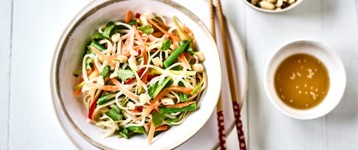
INGREDIENTS
- 150g folded rice noodles
- 75g trimmed green beans, cut into 3
- 1 tbsp toasted sesame oil
- 2 tbsp Chinese rice vinegar
- ½ tsp LoSalt
- 1 carrot, coarsely grated
- 4 spring onions, shredded
- 1 red chilli, deseeded and finely sliced
- ½ x 28g pack coriander, leaves only
- 25g roasted unsalted peanuts
METHOD
- Place the noodles in a large bowl with the beans and pour over enough boiling water to cover, cover with clingfilm and leave for 15 minutes until the noodles are tender then drain well.
- Meanwhile, in another large bowl, mix together the oil, vinegar and LoSalt, stir in the carrot, spring onions, chilli, coriander and drained noodles and beans. Serve warm or cold scattered with peanuts.